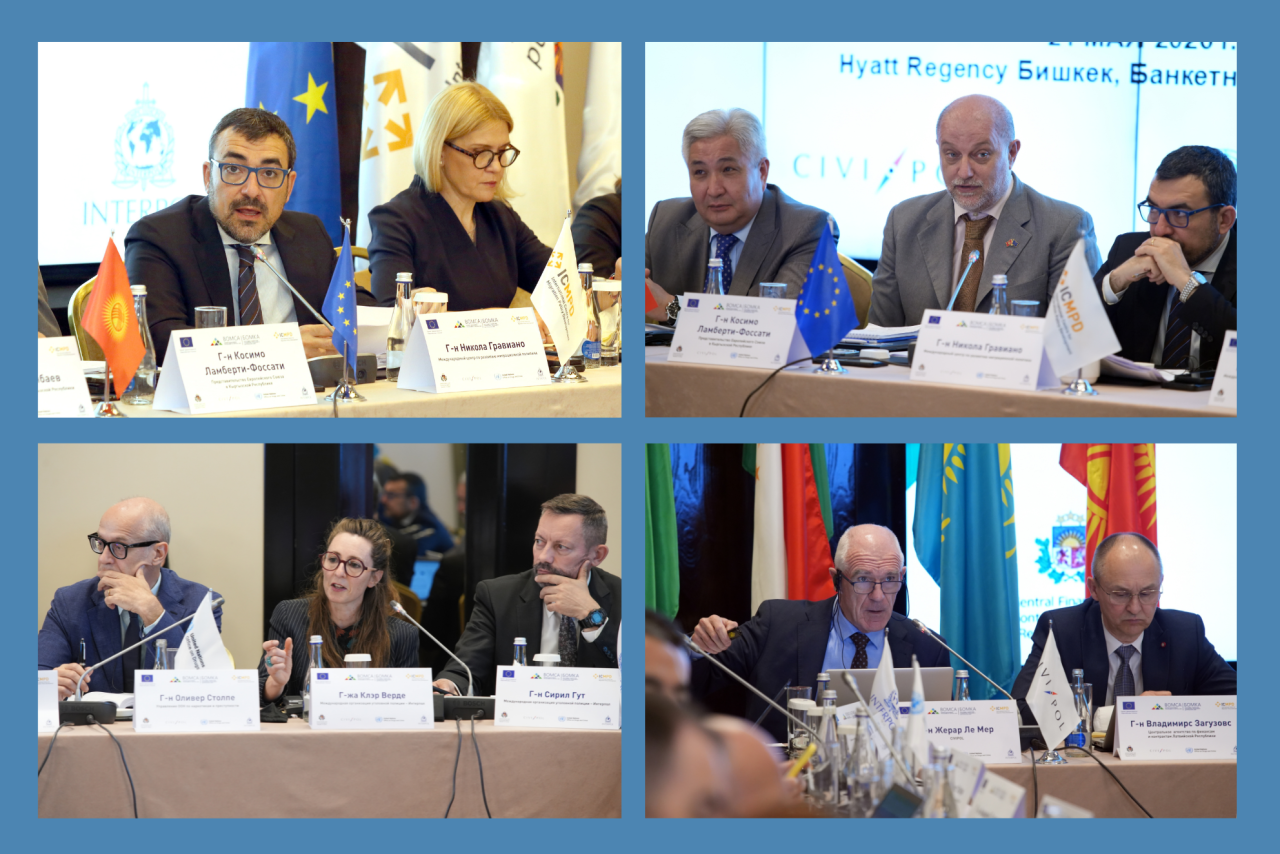
On 21 May 2026, the 11th phase of the Border Management Programme in Central Asia (BOMCA 11) was officially launched at the Opening Conference in Bishkek, Kyrgyzstan.
The event brought together over 80 representatives of the national border and law enforcement agencies and other government partners from five Central Asian countries, EU Delegations, international organisations and the BOMCA Consortium partners to present the goals, objectives and planned activities of the Programme. It also served as a platform to strengthen mutual understanding among participating parties regarding the Programme implementation approach, key priorities and expected results, while informing the wider public and international community about BOMCA 11’s strategic objectives and regional scope.
“BOMCA very well represents the spirit of the EU-Central Asia cooperation, which aims to facilitate regional integration. The European Union believes that regional collaboration offers the best tools for addressing common challenges, and is instrumental in ensuring security and stability”, - noted Mr. Eduards Stiprais, EU Special Representative for Central Asia, in his welcoming speech.
BOMCA is the long-standing flagship EU-funded programme in the region. It is implemented by the Consortium of implementing partners led by the International Centre for Migration Policy Development (ICMPD). The Programme started on 1 February 2026 and will run for 40 months, with a total budget of EUR 12 million. BOMCA 11 aims to advance regional cross-border cooperation, tackle organised crime and improve living conditions for population in border regions of Central Asia by applying integrated border management approach and gender-balanced and human-rights centered principles. The Programme focuses on three thematic components: enhancing institutional capacity and border procedures, addressing cross-border threats, and fostering engagement with border communities. Geographically, it covers five countries of the region – Kazakhstan, Kyrgyzstan, Tajikistan, Turkmenistan and Uzbekistan.
Mr. Nicola Graviano, Deputy Director for Migration Dialogues and Cooperation at ICMPD, emphasised the strategic relevance of the Programme and its contribution to strengthening regional cooperation and promoting EU and international best practices in border management. “Since 2003, the BOMCA Programme has played a key role in building sustainable partnerships with the governments of Central Asia and fostering cooperation among the five Central Asian countries to support regional stability and security. BOMCA has been instrumental in promoting the exchange of good practices from EU Member States, including the application of integrated border management principles and the alignment of border control procedures with international standards. At the same time, the Programme has also facilitated the identification and exchange of good practices within the region itself,” he noted.
Since its launch in 2003, the BOMCA Programme has focused on capacity building and institutional development of the Central Asian border agencies, developing trade corridors and the facilitation of trade, improving border management systems and eliminating drug trafficking across the Central Asia region. Since BOMCA 10, border communities are actively involved in implementation, seeking to improve cross-border cooperation and trust. The current phase, built on the achievements and results of the previous activities, will continue to work to support cross-border cooperation and improve living conditions of people residing in the border regions of Central Asia.