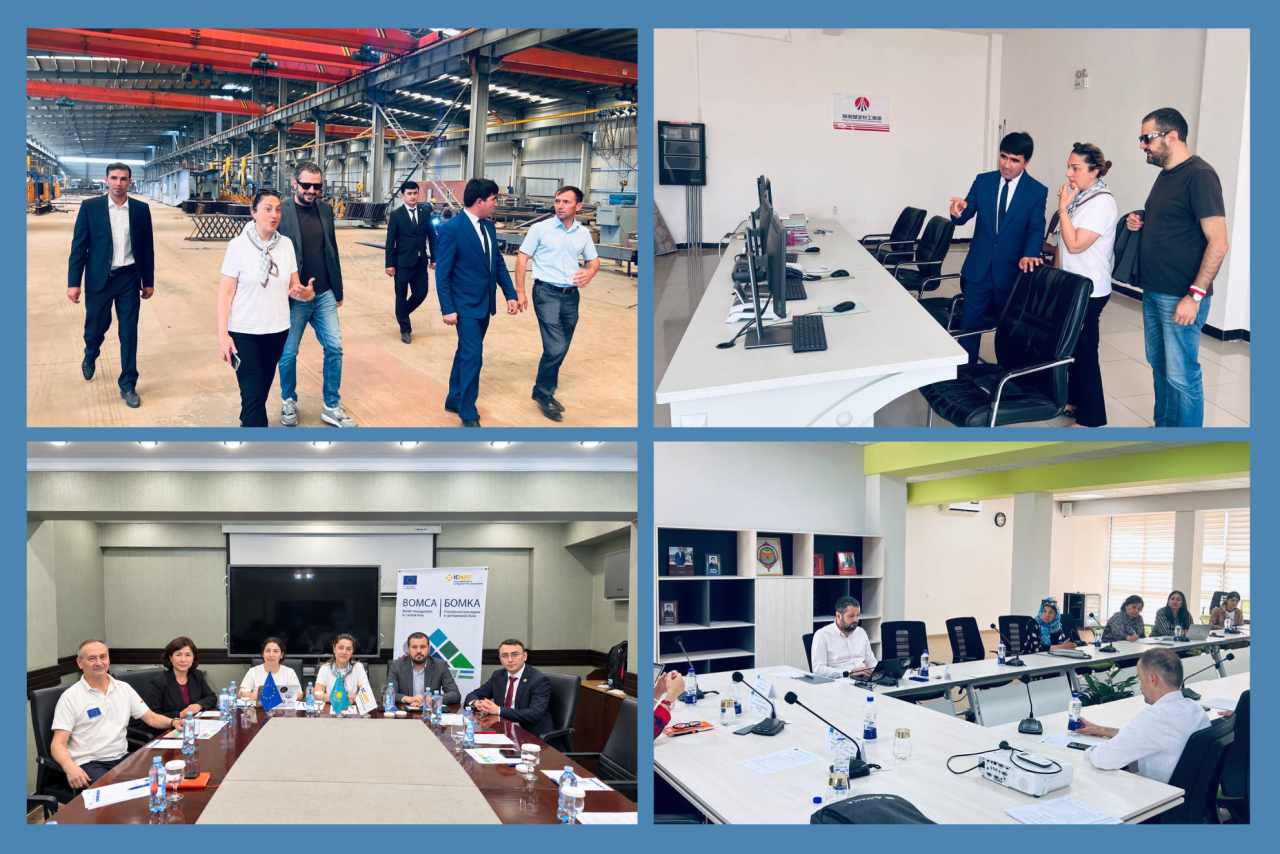
From 16 to 24 September 2026, the EU-funded Border Management Programme in Central Asia (BOMCA 11) continued its series of field missions to map business initiatives and entrepreneurship support ecosystems across Central Asia, this time focusing on selected border regions of Tajikistan and Kazakhstan.
The mapping team met with central and regional government institutions, business-support organisations, financial institutions, development partners and civil society, while also visiting free economic zones, businesses and border-crossing points. In Tajikistan, consultations were held in Dushanbe, Khujand and Bokhtar, with visits to the Sughd and Dangara free economic zones. In Kazakhstan, the team met stakeholders in Almaty, Astana and Turkestan Region and visited a craftsmen’s centre, a dairy enterprise and the Kaplanbek border crossing with Uzbekistan.
The consultations highlighted different but complementary areas of business potential. In Tajikistan, agriculture and agro-processing, trade, handicrafts, beekeeping and tourism emerged as important sectors, with particular potential to move from primary production towards processing and higher-value products. In Kazakhstan, industrial and free economic zones, tourism, creative industries, processing and digitalisation were among the areas identified as having strong potential for further development.
At the same time, businesses and support organisations pointed to a number of common challenges, including limited access to finance, skills gaps, market and export know-how, infrastructure and logistics. In Tajikistan, particular attention was given to the economic reintegration of returned and deported migrants and to the barriers faced by women and other vulnerable groups. In both countries, start-ups and smaller businesses face difficulties accessing commercial finance, highlighting the importance of combining training and coaching with grants or subsidised financing and continued follow-up.
The missions also provided insights into the role of cross-border trade and economic infrastructure. Free economic zones in both countries were identified as potential enablers of business development, although their relevance and accessibility for micro, small and medium-sized enterprises vary.
The mapping exercise also identified potential synergies with existing business-support initiatives and development partners, including chambers of commerce, entrepreneurship support organisations, microfinance institutions, business incubators and free economic zone administrations. These partnerships can help build on existing support mechanisms and strengthen the reach and relevance of future interventions.
The findings from Tajikistan and Kazakhstan will now feed into the broader regional mapping exercise, together with the missions already conducted in Kyrgyzstan and Uzbekistan and the upcoming mission in Turkmenistan. The results will help BOMCA 11 identify promising business initiatives and shape future targeted business coaching and support tailored to the realities, opportunities and needs of border communities.