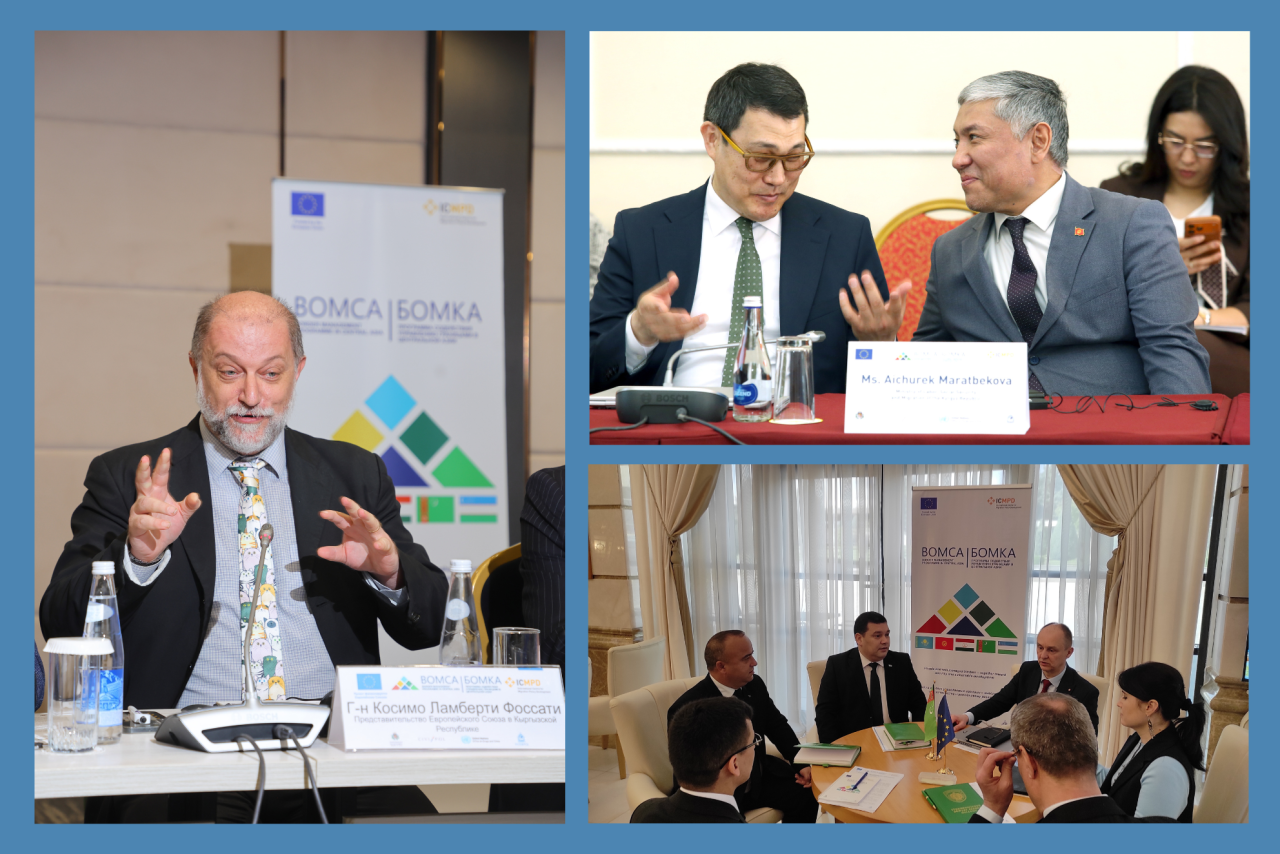
Between 30 March and 22 April 2026, the Border Management Programme in Central Asia – Phase 11 (BOMCA 11) conducted the first round of National Steering Group meetings across Kazakhstan, Kyrgyzstan, Tajikistan, Turkmenistan and Uzbekistan.
The consultations brought together representatives of Security Councils, Ministries of Foreign Affairs, border and customs services, Ministries of Interior, migration services, local and international development agencies. The meetings introduced the new phase of the Programme and facilitated consultations with national beneficiary institutions on the thematic priorities and planned activities.
These discussions contributed to the fine-tuning of the Programme Work Plan for 2026, validated the overall programme design, and ensured alignment with the priorities of government counterparts, paving the way for the effective launch of programme implementation. The national-level consultations will be followed by the Regional Steering Group meeting and the official Opening Conference, taking place in Bishkek, Kyrgyzstan, on 20–21 May 2026 and bringing together representatives from all Central Asian countries.
Border Management Programme in Central Asia is implemented by the Consortium of implementing partners led by the International Centre for Migration Policy Development. BOMCA 11 aims to advance regional cross-border cooperation, tackle organised crime and improve living conditions for population in border regions of Central Asia by applying integrated border management approach and gender-balanced and human-rights centered principles. The Programme focuses on three thematic components: enhancing institutional capacity and border procedures, addressing cross-border threats, and fostering engagement with border communities. It covers five countries of the region – Kazakhstan, Kyrgyzstan, Tajikistan, Turkmenistan and Uzbekistan. The Programme started on 1 February 2026 and will run for 40 months, with a total budget of EUR 12 million.
BOMCA is the long-standing flagship EU-funded programme in the region. Since its launch in 2003, the BOMCA Programme has focused on capacity building and institutional development of the Central Asian border agencies, developing trade corridors and the facilitation of trade, improving border management systems and eliminating drug trafficking across the Central Asia region. Each new phase of BOMCA was designed to gradually build upon and consolidate the results achieved during the preceding phases. Since BOMCA 10, border communities are actively involved in implementation, seeking to improve cross-border cooperation and trust.