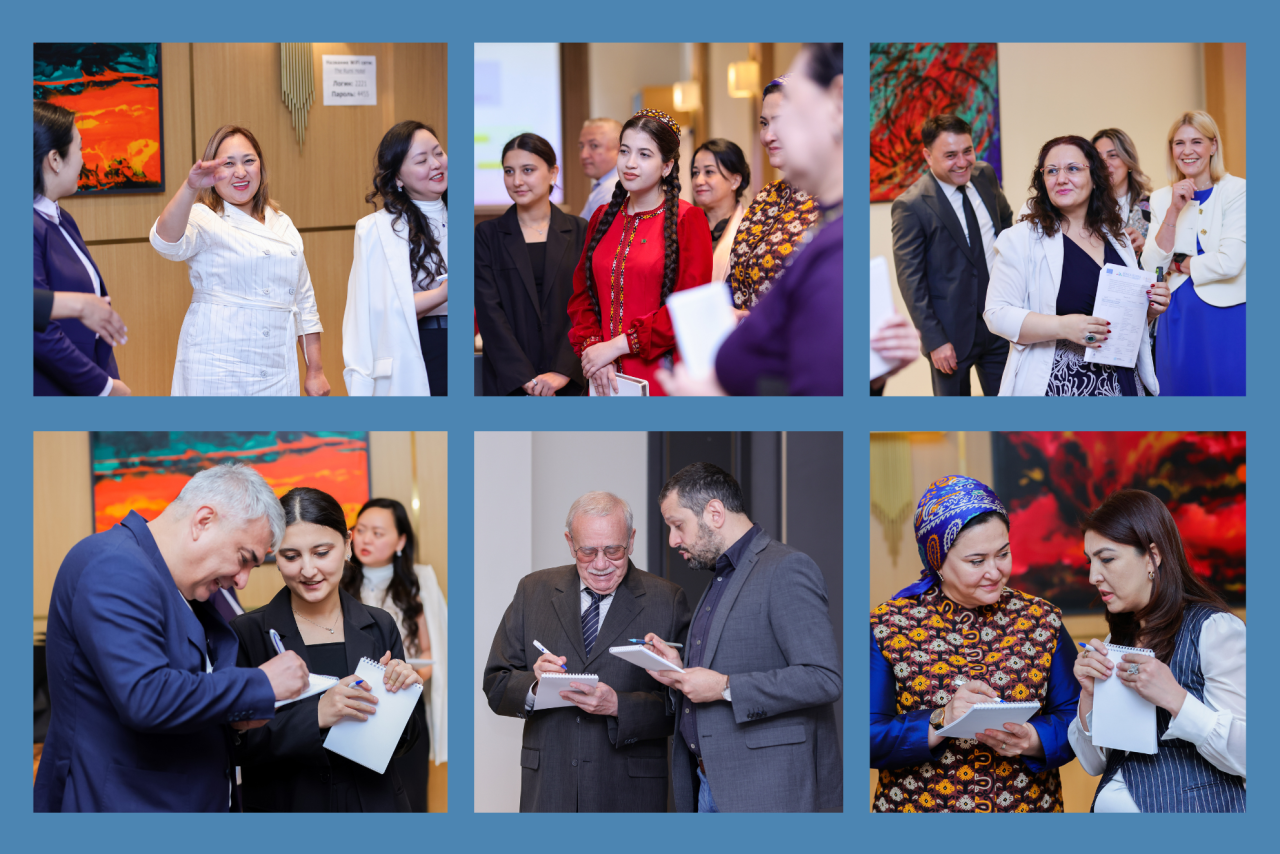
On 14-15 September 2026, the EU-funded Border Management Programme in Central Asia (BOMCA 11) organised a regional roundtable on women’s entrepreneurship in Central Asian border regions in Dushanbe, Tajikistan. The two-day event brought together representatives of government institutions and civil society organisations from Kazakhstan, Kyrgyzstan, Tajikistan, Turkmenistan and Uzbekistan to exchange experiences and explore ways to strengthen women’s economic empowerment and cross-border cooperation.
The two-day roundtable provided a platform for participants to exchange country experiences, successful approaches and lessons learned in promoting women’s entrepreneurship and economic empowerment, with a particular focus on the opportunities and challenges faced by women in border regions. Discussions explored common barriers related to cross-border trade, migration, access to markets, business development services and networking, while highlighting opportunities for stronger cooperation among stakeholders across the region.
Through interactive sessions, participants examined common challenges affecting women-led businesses in border areas and worked together to identify practical solutions. A dedicated “Cross-Border Innovation Fair” and partnership-focused sessions provided an opportunity to develop ideas for future cooperation and explore potential community-led initiatives connecting stakeholders across borders.
The roundtable resulted in initial recommendations for strengthening cooperation between public institutions, civil society organisations and local communities in supporting women entrepreneurs. Participants also identified priority areas and developed preliminary concepts for future bilateral and sub-regional capacity-building and border community initiatives under BOMCA 11, serving as a basis for the development of a roadmap for future targeted project activities.
The roundtable was organised under Component 3, “Engagement with Border Communities”, which aims to improve cross-border cooperation between Central Asian border communities through support to local economic development and addressing common challenges, with a focus on human rights, gender equality and groups in vulnerable situations. The activity contributes to BOMCA 11’s broader efforts to promote women’s economic empowerment, strengthen community resilience and support inclusive and sustainable development across the region.